
Discover simple tips to master the school lunch routine.


Packing school lunches can feel rushed and overwhelming. It’s not always easy to balance nutrition, food preferences, cost and limited time. Our registered dietitians created this article to help make packing school lunches simpler. It can help parents who are new to packing lunches or those who need fresh lunch box ideas. The article includes practical tips to help save time, reduce food waste and build nutritious lunches. The tips below are organized into five key steps: organize, shop, meal prep, pack and unpack.
The article also connects to many visuals, recipes and practical ideas that you can download or print. The School lunch tip sheets will be used as examples throughout this article.
Organize
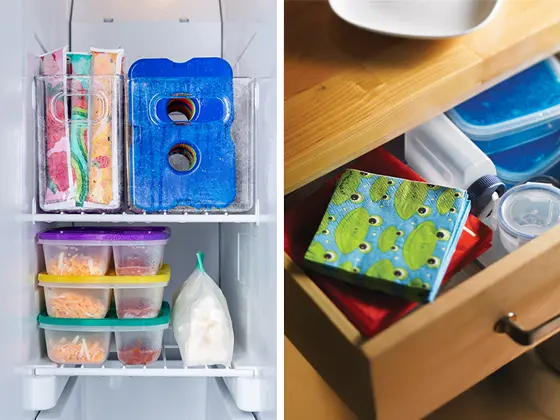
A little organization can make lunch packing less stressful. Keeping lunch foods and supplies in designated spaces will make it quicker to pack lunches. Everything will be in one place and easy to find.
Tips:
- Dedicate a space in your fridge for ready-to-go foods for lunches.
- Use a clear bin to store icepacks in your freezer.
- Set aside a shelf in your pantry or cupboard for school lunch foods.
- Turn a kitchen drawer into a lunch-packing station with cutlery, napkins and containers.
- Store items where kids can reach them if possible. This will allow kids to help pack their lunch.
Shop
Budget-friendly, nutritious options can be found at the grocery store. Many of these are also low-prep and can be packed quickly into the lunch box. Shopping wisely supports healthy eating while saving money and reducing stress.
Tips:
- Make a grocery list before heading to the store.
- Look for sales and coupons for foods you usually buy. Stock up when you can.
- Compare the cost of different sizes and brands. Do this by checking the unit price on shelf labels. It shows the cost per 100 g or 100 mL.
- Use the % Daily Value (% DV) to compare similar products. This shows you if there is a little or a lot of a nutrient in the food. 5% DV or less is a little, while 15% DV or more is a lot. Let’s use milk as an example. Both calcium and vitamin D are more than 15% Daily Value. This means that milk has a lot of these two important nutrients. Learn more about % DV by going to the Health Canada website.
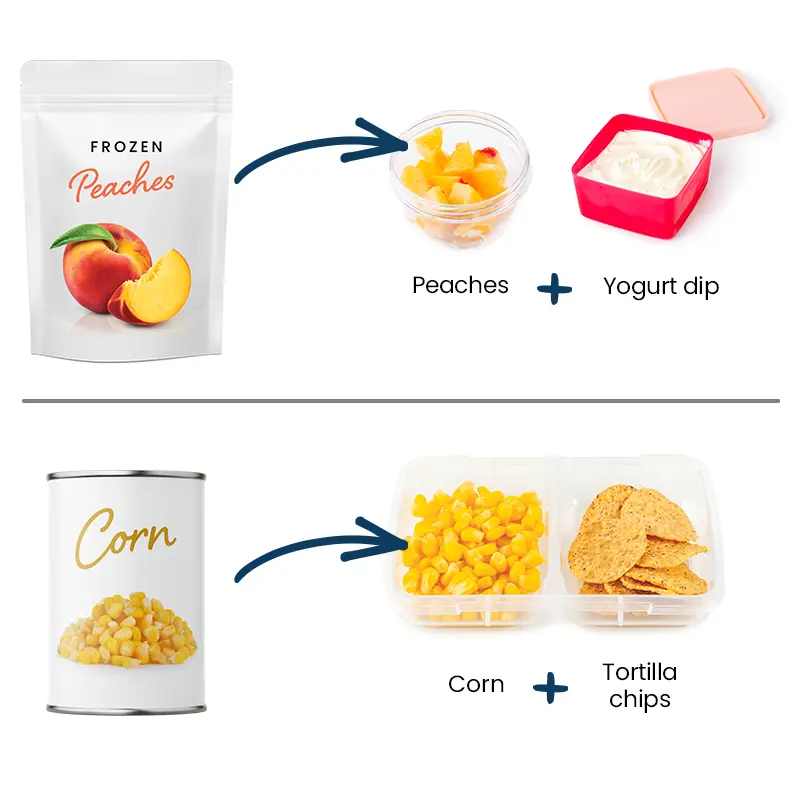
- Try canned and frozen vegetables and fruits. They are just as nutritious as fresh and can save you time because they are washed and prepared. They will also keep longer and help prevent food waste. They are a win for busy parents!
Meal prep
Preparation ahead of time can make a big difference on busy school mornings.
Tips:
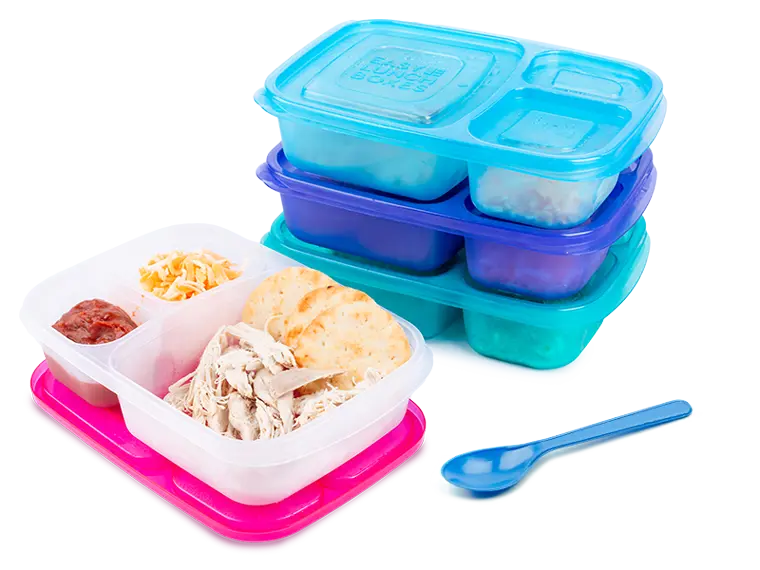
- Cook extra food at your main meal so you have leftovers for lunch. Heat the leftovers and send in an insulated container the next day.
- Make DIY kits ahead. One popular idea is to assemble and freeze mini pizza kits ahead of time for a quick lunch. Children can build their pizzas at lunchtime.
- Freeze sandwiches for the lunch box! Make several sandwiches at once and freeze them for grab-and-go lunches. Place a paper towel above and below sandwich in freezer bag. Use a straw to suck out air before sealing bag. This helps prevent the sandwich from getting soggy.
- Look for small pockets of time where you can get something ready in advance. For example, wash and pre-portion vegetables and fruits for snacks to have in your fridge.
Pack
There are many things to consider when packing a lunch. This includes building a balanced meal, keeping food safe and making lunchtime fun for children.
Tips:
- Put Canada’s Food Guide into practice at lunchtime. Include a variety of foods from the three categories: vegetables and fruits, whole grains and protein foods. Learn more here.
- Save time during rushed mornings! Pack the lunch box the night before and store in the fridge. Add ice packs in the morning before school.
- Use an insulated thermos to keep foods hot. Use a shorter insulated container so young children can reach the food.
- Keep foods cold by using an insulated lunch bag and ice packs.
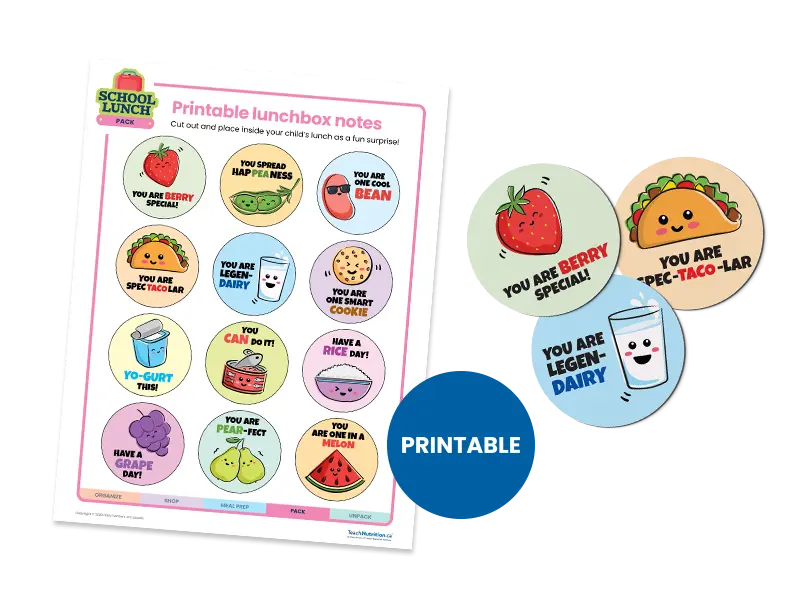
- Add fun notes in the lunch box to make your child smile.
🥪 Lunch box inspiration: Get free printable lunch notes here. Find it under “packing tips”.
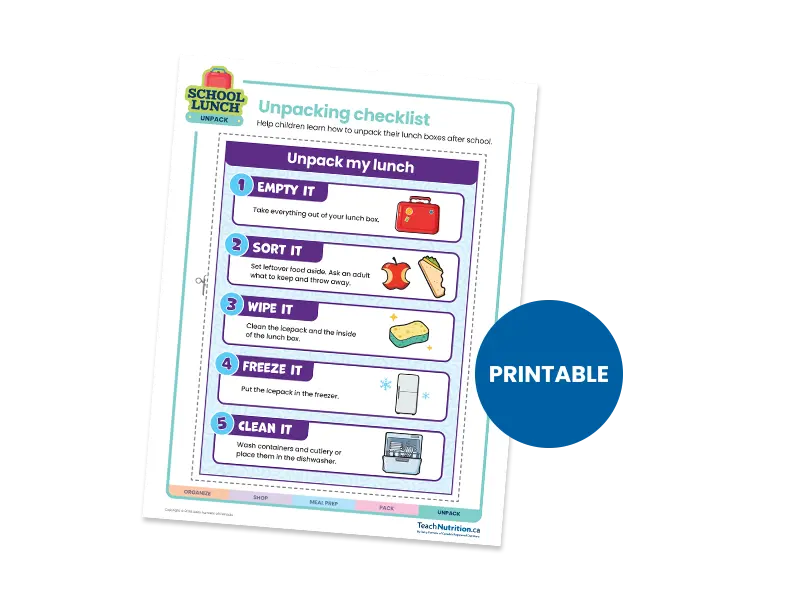
Unpack
Unpacking is a chance to see what comes home uneaten and look for ways to make lunch work better for your child. It’s also an opportunity to teach children how to unpack their lunch box and sort their food while building independence.
Tips:
- Help kids with items that are hard to open on their own.
- Pre-peel wrappers on cheese strings.
- Crack the stem of a banana so it’s easier to peel.
- Transfer single-serve yogurt and fruit cups into small containers.
- Offer smaller portions so the amount of food is less overwhelming.
- Help kids build a routine of unpacking their lunch box. Show how to sort through uneaten food. Teach children which foods can be returned to the pantry lunch station and which ones should be discarded.
📋 Printable sheet: Download the unpacking checklist here. Find it under “unpacking tips”.
Common questions from parents and educators
#1 How can I get my picky eater to eat their lunch?
Start with familiar favourites and introduce new foods gradually. Start by offering new foods at home before sending them in the lunch box. Be patient since children may need 10–15 exposures before they learn to like a new food. Let your child help choose snacks or pack part of their lunch. This will help to build interest and ownership.
🔗 Learn more: Redefining picky eaters
#2 What if my child is bored with their lunch and brings foods back home?
Refresh the routine when prepping for lunches! Favourite foods can lose their appeal when they are served the same way every day. Try serving food in fun or different ways. Cut cucumbers into shapes, layer yogurt in a parfait, or add dips to fruits and veggies.
#3 Why is it helpful to get kids involved in preparing their school lunch?
Children are more likely to eat and enjoy foods when they help prepare them. Involving kids in lunch prep builds confidence and develops kitchen skills. It also makes the routine more engaging for the whole family. You can start with simple tasks like choosing snacks or assembling parts of their lunch.
🔗 Try our Cooking illustrations to help kids build kitchen skills.
#4 Are there easy, make-ahead lunch ideas I can try?
Yes! Make-ahead lunches can save time on busy mornings and help reduce stress. Try leftovers, freezer-friendly wraps, DIY pizza kits, or overnight oats.
🔗 Explore more ideas: Meals in a Jar
#5. How can I keep foods cold?
Cool foods completely before packing. Use an insulated lunch bag. Make sure foods that need to stay cold are touching an ice pack.
#6. How can I keep foods hot?
Fill an insulated container with boiling water. Tighten the lid and let sit for 10-15 minutes. Heat the food in the microwave or on the stove. Empty the water from the container. Transfer the hot food to the insulated container. Close the lid quickly to avoid losing heat. Note: never put an insulated container in the microwave.